
Taoist Funerals in Singapore: Understanding the Traditions of Each Dialect Group

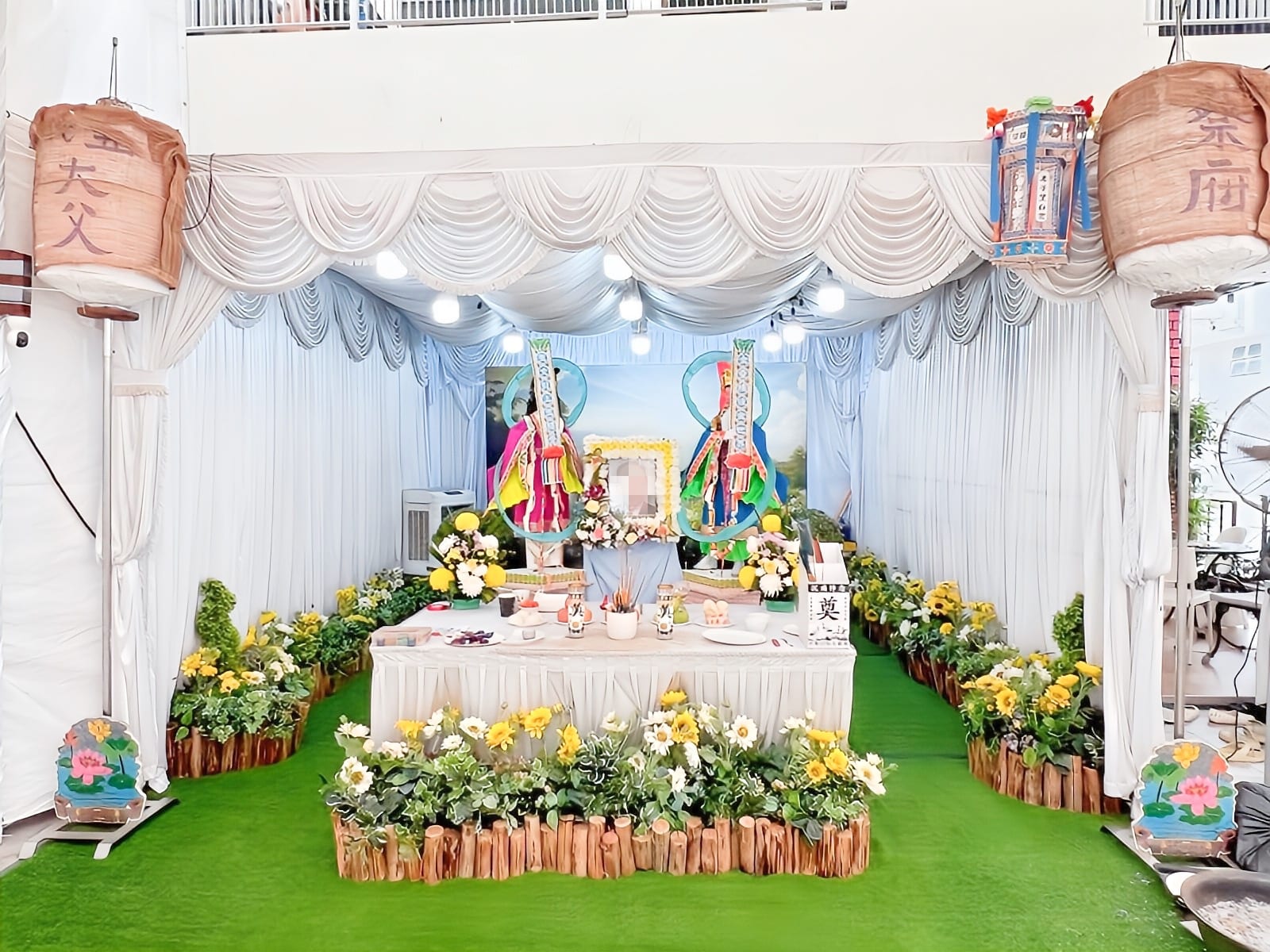
In Singapore’s majorly Chinese community, Taoist Funerals remain one of the most symbolic and deeply rooted cultural rites.
While united by common beliefs — (1) honouring the departed (2) guiding the soul and (3) maintaining harmony between the living and the afterlife — each dialect group expresses these values in their own unique way.
At Harmony Funeral Care, we believe in preserving these meaningful customs with dignity and precision, ensuring that every detail aligns with your family’s dialect heritage and religious beliefs.
Here’s an in-depth look at the differences and similarities between Taoist funerals across major dialect groups in Singapore:
🕯️ 1. The Foundation of Taoist Funerals
Taoist funerals are based on the belief in yin and yang, ancestral reverence, and the journey of the soul through different realms before reaching peace.
Core elements often include:
- Prayers and chanting to guide the soul safely.
- Offerings of food, incense, and paper effigies for use in the afterlife.
- Taoist priests (道长) who conduct rituals to dissolve karmic ties and ensure balance.
- Filial rites by family members to show respect and gratitude.
While these principles remain consistent, each dialect has its own ceremonial style, sequence of prayers, and choice of deities. Below, we will explore further on the minute differences that the different dialects of a Taoist Funeral has:
🧧 Hokkien Taoist Funerals (福建)
Hokkien funerals are among the most elaborate and widely practiced in Singapore. They emphasise gratitude to ancestors and protection from the underworld spirits.
Key Features:
- Presiding deity: The Jade Emperor (玉皇大帝) and Ti Kong (天公) play significant roles.
- Chants and music: Priests chant from the Da Bei Zhou (Great Compassion Mantra) and Jade Emperor Sutra.
- Rituals: Paper effigies such as paper houses, cars, and servants are burned to provide for the deceased in the afterlife.
- Timing: The funeral typically lasts 3–5 days, with rituals on the first, third, and final nights.
- Unique element: The “Breaking of the Bridge” (破桥) ritual symbolises the soul’s crossing from the mortal world to the spiritual realm.
Hokkien families also tend to have large-scale wakes, with elaborate altars and a focus on filial piety and respect. The Hokkien Clan is also said to be the dialect group of people who value "face - 面子" the most.
🕊️Teochew Taoist Funerals (潮州)
Teochew funerals are known for their solemnity, simplicity, and sincerity. The focus is often on prayers and offerings, with fewer decorative elements than Hokkien customs. The Teochew clan does not typically have post funeral prayers and hence they tend to spend more on the last rites as it's a one time event.
Key Features:
- Presiding deity: The Earth Deity (土地公) and the God of the Afterlife (地藏王菩萨).
- Rituals: The chanting of Di Zang Jing (Sutra of the Earth Store Bodhisattva) to help the soul find peace.
- Funeral music: A more melancholic tone, often accompanied by traditional suona (reed instruments).
- Duration: Typically 3 to 7 days.
- Unique element: The offering of “Crossing the Bridge of Sins” (过阴桥), symbolising purification before rebirth.
Teochew families place great emphasis on respectful silence and modest expression, valuing sincerity over grandeur.
🌸 Cantonese Taoist Funerals (广东)
Cantonese funerals are highly ceremonial, blending Taoist and Buddhist influences. They are known for their precise structure and ritual symbolism.
Key Features:
- Presiding deities: The Lord of Hades (阎罗王) and the Ten Kings of Hell (十殿阎罗).
- Priests and monks: It’s common to have both Taoist priests and Buddhist monks chanting in alternation.
- Offerings: Roast pig, fruits, and symbolic paper treasures.
- Attire: Family members wear different colours of mourning clothes depending on their relationship to the deceased.
Unique element: The “Sending of the Soul” (送魂) ceremony, performed with paper effigies and a final farewell ritual.
Cantonese customs place strong emphasis on ritual correctness — each action has meaning, and each prayer corresponds to a specific stage of the soul’s journey.
🪔Hainanese Taoist Funerals (海南)
Hainanese funeral traditions are less elaborate than Hokkien or Cantonese ones but are deeply devotional and symbolic.
Key Features:
- Presiding deity: Guan Yin (观音菩萨) and the Jade Emperor.
-Rituals: Focus on chanting sutras to deliver blessings to the deceased.
- Music: Soft, melodic chanting accompanied by bell and gong.
- Offerings: Hainanese families often prepare home-cooked offerings as a sign of personal devotion.
- Unique element: Paper tablets are used to represent ancestral lineage, reinforcing the importance of family unity.
Hainanese funerals reflect simplicity, humility, and sincerity — emphasising the moral values of the family rather than elaborate display.
🏵️ Hakka Taoist Funerals (客家)
The Hakka community blends Taoist and ancestral worship traditions, often with distinct regional variations.
Their funerals tend to focus on the continuity of the family line and respect for ancestors.
Key Features:
- Presiding deity: Guan Gong (关公) and Ti Kong (天公).
- Rituals: The chanting of Jade Emperor Sutra and family-led prayers.
- Music: More rhythmic and ritualistic, often led by Taoist priests with cymbals and drums.
- Offerings: Paper mountains, bridges, and boats symbolise the soul’s safe passage.
- Unique element: The “Returning of the Tablet” (回魂) ceremony, when the spirit tablet is brought home for ancestral worship.
Hakka funerals are marked by deep reverence, collective mourning, and an emphasis on community solidarity.
Do note that currently as of writing, Singapore has no local Hakka Priests to help conduct funeral rites and rituals. We hence have to engage Hakka Priests from our neighbouring country - Malaysia to come over to preside over the funeral rites and rituals. This is also why it is expected that Hakka Taoist Funerals are generally more expensive than the other dialects. Do expect the price difference to be at least $800 or more.
Despite dialectal differences, Taoist funerals share core values:
(1) Respect for ancestors and cosmic balance.
(2) Ritual chanting and offerings to aid the soul’s journey.
(3) Use of symbolic items such as paper effigies, incense, and candles.
(4) Emphasis on filial piety, harmony, and gratitude.
Ultimately, each dialect’s variation reflects not division, but the richness of Chinese heritage — the many ways of expressing one universal truth: love continues beyond death.
Planning a Taoist Funeral with Harmony Funeral Care
At He Xie Funeral, we understand the deep meaning behind every chant, offering, and ritual.
Our team works closely with Taoist masters and dialect representatives to ensure that each funeral — whether Hokkien, Teochew, Hainanese, Cantonese, or Hakka — is conducted with authenticity, respect, and care.
From altar setup and priest coordination to custom offerings and ceremonial guidance, we ensure every farewell is conducted with harmony — in both spirit and tradition.
📞 Contact us today at +65 94892424 to learn more about our Taoist Funerals.
Why choose Harmony Funeral Care?
At Harmony Funeral Care, we aim to preserve over 60 years of tradition of serving bereaved families. We take pride in providing the best support that one can find in grief and offer:
- Dedicated And Experienced Staff To Guide You
- Competitive Funeral Packages To Ensure Affordability For All
- Free Video Montage On Funeral Day
- Transparent Pricing With No Hidden Costs
Call us now at +65 9489 2424 for a non-obligatory consultation!
Get A Quote Now
A humble service done in remembrance of Mr Tee Hock Chwee, founder of Hock Hin Undertaker established since 1963

 WhatsApp us