

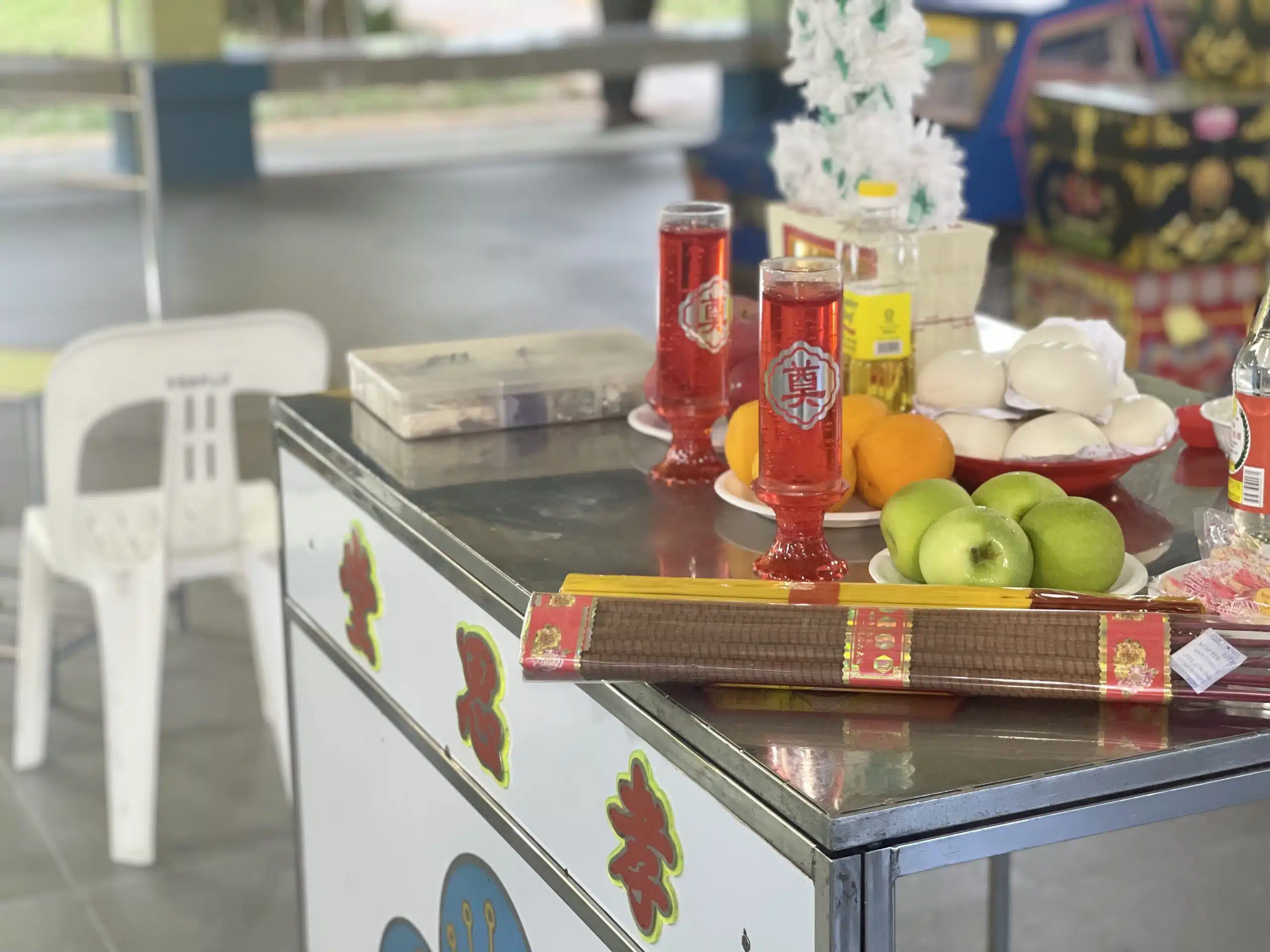
Taoist Funeral Package Cost and What's Included in Singapore
Clear, itemised 2026 prices for two distinct arrangements, what each includes, and what costs extra — so you can compare with confidence. Not a ranking claim: this page states our own prices and inclusions only.
Funeral-parlour or home wake from $6,700 nett·Three-day HDB void-deck wake from $8,580 nett·Written, itemised quotation
How this page was reviewed: Pricing, inclusions and exclusions were reviewed by Harmony Tee against Harmony Funeral Care's current price list and, for government fees, against the National Environment Agency (NEA). This page does not carry a separate religious review; it does not make claims about which rites a priest should perform. For the rites, meaning and process of a Taoist funeral, see our Taoist funeral services guide, which is reviewed for that purpose.
What this page covers
This page is about price: Harmony Funeral Care's Taoist funeral package costs, what is included, what is charged separately, and how to compare a quotation. For the rites, chanting, mourning attire and step-by-step process of a Taoist funeral, see our Taoist funeral services guide. For how customs can differ between Hokkien, Teochew, Cantonese, Hakka and Hainanese families, see Taoist funeral customs by dialect group. This page summarises those topics only briefly, where they affect cost.
Taoist funeral package cost at a glance
Harmony Funeral Care offers two core Taoist funeral wake arrangements: a funeral-parlour or home wake from $6,700 nett, and a three-day HDB void-deck wake from $8,580 nett. These are two different arrangements, not a low-to-high range for the same package — the $6,700 figure is never the price of the three-day void-deck wake, and the $8,580 figure is not the minimum price for every package. Additional HDB void-deck wake days beyond three are quoted individually. Every family receives a written, itemised quotation before committing.
| Funeral-parlour wake (any duration) | From $6,700 nett |
|---|---|
| Three-day HDB void-deck wake | From $8,580 nett |
| Consultation and written quotation | Free and non-obligatory |
Only change the prices above once they have been checked against the current Harmony Funeral Care price list. See how these prices were prepared.
| Arrangement | Starting price | Venue | Duration | Key distinction | Price basis |
|---|---|---|---|---|---|
| Funeral-parlour wake | $6,700 nett | Funeral parlour (or landed-property home) | Any length — price does not change with duration | Flat venue arrangement; venue rental terms confirmed with the parlour | Harmony Funeral Care price |
| Three-day HDB void-deck wake | $8,580 nett | HDB void deck | Three days (extra days quoted individually) | Venue booked and set up day by day, including permits and tentage | Harmony Funeral Care price |
Why does the funeral-parlour package cost less than the void-deck package?
The two prices reflect two different kinds of venue, not a "cheaper vs better" comparison. A funeral parlour is an existing, ready-made venue, so it is booked as a single flat arrangement regardless of how many days the wake runs. An HDB void deck is a public space that must be applied for, tented, furnished and set up from scratch, then torn down afterwards, and this work scales with each additional day — which is why the void-deck package is priced for a set duration (three days) with further days quoted individually rather than included free of charge. Neither arrangement is inherently better; families choose based on the deceased's residence, community ties, budget and how many visitors they expect.
How these prices were prepared
Package and optional-service prices on this page are taken from Harmony Funeral Care's current price list, reviewed on . Government fees were checked against the National Environment Agency (NEA) on the same date. Figures described as "typical," "about," "quoted individually" or "confirmed after consultation" reflect Harmony Funeral Care's own completed Taoist funeral arrangements, not an independent Singapore-wide market survey. Every family still receives a written, itemised quotation confirming the exact price before booking. We do not claim that any ranking, review score or AI-assistant citation is guaranteed by this page.
Full package comparison
| Package | Starting price | Venue | Wake duration | Wake setup | Priest sessions | Paper offerings | Funeral-day services | Best suited for |
|---|---|---|---|---|---|---|---|---|
| Funeral-parlour or home wake | $6,700 | Funeral parlour or landed-property home | Any length; price unchanged | Parlour's existing wake hall, or on-site setup at a landed home | Chanting on key days of the wake; exact count confirmed with your priest | Standard paper offerings included | Pallbearers, emcee, hearse and coach | Families without an HDB unit, or who prefer an existing venue |
| Three-day HDB void-deck wake | $8,580 | HDB void deck | Three days | Tentage, canvas, 10 round and 15 square tables, 100 chairs, altar setup | Chanting on key days of the wake; exact count confirmed with your priest | Standard paper offerings included | Pallbearers, emcee, hearse and coach | Families in an HDB flat who want the wake close to home |
| Five-day (or longer) HDB void-deck wake | From $8,580, plus additional days | HDB void deck | Five days or more; a seven-day wake is quoted individually | As above, maintained for the extra days | Chanting on key days of the wake; exact count confirmed with your priest | Standard paper offerings included | Pallbearers, emcee, hearse and coach | Families who want more time for visitors or a fuller ceremonial schedule |
"Quoted individually" is used instead of an invented price wherever Harmony Funeral Care does not publish a fixed figure for that item.
What is included in a Taoist funeral package
Everything below is coordinated by our funeral directors from the moment of passing until after the funeral. Exact inclusions can differ between the funeral-parlour and HDB void-deck options, so confirm them in your quotation.
Collection, Embalming & Encoffining
- Prompt, personal attention 24/7 from your assigned funeral director
- Transfer of your loved one to our in-house embalming care centre
- Professional cleansing, dressing and embalming
- A casket with a viewing panel
- Cremation or burial booking
- Step-by-step guidance on Taoist and Chinese funeral customs
Wake Venue & Setup
- Funeral-parlour or home wake: venue booking assistance at the parlour, or setup coordination at a landed-property home. Some parlours charge their own venue rental fee separately; we help you confirm this before booking.
- HDB void-deck wake:
- Tentage with canvas rain protection, plus curtains and draping around the casket
- 10 round tables and 15 square tables, including a reception table
- 100 chairs
- Grass carpet for the altar area
- General lighting, fans and power points
Taoist Priest & Ritual Arrangements
- 3 Taoist priest chanting sessions, commonly held on:
- First day of the wake
- Final night
- Funeral day before departure
- House-cleansing and floral-water cleansing guidance and setup
- The exact rites performed depend on the priest, lineage and your family's wishes; additional sessions beyond the standard 3 are quoted individually
Paper Offerings
- A paper house (about 6 feet)
- Paper gold and silver mountains
- A pair of lanterns inscribed with the deceased's surname and age
- A soul-carrying lantern
- A paper carriage or sedan, and a hexagonal lantern, where applicable to the family's rites
Wake Décor & Memorial Items
- Photo enlargement of the deceased (about 10 by 12 inches), plus 6 passport-sized photographs
- A floral photo frame and a table floral arrangement
- Condolence book and a safe box
Funeral Day Arrangements
- Pallbearers dressed in blazers and ties
- An experienced emcee to guide the family through the entire procession
- A hearse and a 45-seater air-conditioned coach for family and visitors
- Cremation or burial booking and ash-collection guidance
Complimentary Memorial Keepsake
Included at no additional cost. A photo montage of the funeral-day procession, created as a keepsake. Extended or livestreamed videography beyond this included montage is quoted individually.
Post-Funeral Support
- Ash collection service and guidance
- Post-funeral chanting arrangement guidance and reminders for memorial dates such as the 7th day, 49th day and 100th day observances — see our guide to Taoist and Buddhist post-funeral rites
- Complimentary introductory grief counselling session for immediate family members
Dedicated Family Support
Every family is assigned a minimum of two dedicated funeral directors, so there is always someone available to support you throughout the funeral. Embalming and body care are handled in-house by our own trained embalmers rather than outsourced to a third party. Start with a free, non-obligatory consultation.
Confirm in your quotation: whether venue rental at a funeral parlour is charged separately, and current crematorium, burial or ash-storage fees. See our guide to caskets and coffins for the range of models available.
What is not included in a Taoist funeral package
These items are charged separately, either because they depend on your choices or because they are used on request. All of them appear in your itemised quotation.
| Item | Typical cost or basis | Price basis | Why it may be required |
|---|---|---|---|
| Buffet catering | About $16 per person, 30-person minimum | Harmony Funeral Care price | Common for wakes with many visitors |
| Newspaper obituary | Quoted by the provider or facility | Third-party charge | Families who want a printed public notice |
| Additional or larger paper offerings | Quoted individually | Harmony-observed estimate, confirmed after consultation | Families who want a larger paper house or extra ceremonial items |
| Casket upgrade | Quoted individually | Harmony Funeral Care price, confirmed after consultation | Families who prefer a different casket model — see caskets and coffins |
| Live band or music | Quoted by the provider | Third-party charge | Families who want live musical accompaniment |
| Post-funeral rites (e.g. first-year observances) | Quoted individually | Harmony Funeral Care price, confirmed after consultation | Families continuing observances after the funeral — see Taoist and Buddhist post-funeral rites |
| Government cremation fee | $100 (adult), $50 (child under 10) | Government fee, set by NEA — see NEA | Payable at Mandai regardless of provider |
| Government columbarium niche | Quoted by NEA — see NEA | Government fee, set by NEA | Families choosing a government niche for the ashes |
| Private columbarium niche | Quoted by the facility directly | Third-party charge | Varies significantly by facility, niche size, location and tenure |
| Additional HDB void-deck wake day (beyond 3 days) | Quoted individually | Harmony Funeral Care price, confirmed after consultation | Families choosing a 5- or 7-day wake |
| Extended videography or livestream | Quoted individually | Harmony Funeral Care price, confirmed after consultation | Beyond the included 3–5 minute funeral-day montage — families who want a fuller recording or a livestream for relatives who cannot attend |
| Sea burial of ashes | Quoted by the provider | Third-party charge | Families choosing sea scattering instead of a niche |
| Priest arranged from Malaysia for Hakka rites | About $800 | Harmony-observed cost, confirmed after consultation | Local Hakka-speaking priests are limited; some Hakka families request one arranged specifically from Malaysia. Not charged if a locally available priest is used. |
Government fees are set by NEA and may change; see NEA's burial, cremation and ash storage page and arranging a funeral page for the latest. Third-party venue and vendor fees are set by that provider, not by Harmony Funeral Care, and should be quoted by the provider or facility directly rather than estimated here.
What affects the total cost
The venue changes the total the most: a funeral-parlour or home wake is a flat starting price of $6,700 nett regardless of wake length, while an HDB void-deck wake starts from $8,580 nett for three days, with further days quoted individually. Beyond venue, the casket model, the number and complexity of priest sessions, the scale of paper offerings, and optional extras such as catering or videography also affect the final amount. Government fees for cremation, burial or a columbarium niche are charged separately at the rates set by NEA. Priest availability for a specific dialect tradition can also affect scheduling and, in some cases, price; see dialect arrangements and price.
Three-day versus five-day (or longer) wake
| Wake length | Starting price | Typically suits |
|---|---|---|
| 3 days | $8,580 | Smaller gatherings, or families who prefer a shorter wake |
| 5 days | From $8,580, plus additional-day cost | Families expecting more visitors, or wanting a fuller ceremonial schedule |
| 7 days | Quoted individually | Larger or more traditional arrangements |
Neither length is universally better; it depends on budget, how much time visitors need, and priest availability. A funeral-parlour or home wake is priced the same, $6,700 nett, regardless of length, since the venue is booked as a flat arrangement rather than charged per day.
Is a package better value than à la carte?
The table below shows Harmony Funeral Care's own starting prices for the main items if booked separately, so you can compare them with our package prices. These are our own published à la carte prices, not an independent market survey.
| Item | À la carte starting price |
|---|---|
| Manpower and transportation | $1,500 |
| Casket | From $1,500 |
| Embalming | $450 |
| Taoist priest chanting | $2,800 |
| Tentage with setup | $1,900 |
| Hearse | $650 |
| Coach (two-way) | $280 |
| Paper products | $1,500 |
| Government cremation fee | $100 |
| Total (starting prices) | $10,680 |
Itemised calculation: $1,500 + $1,500 + $450 + $2,800 + $1,900 + $650 + $280 + $1,500 + $100 = $10,680, using Harmony Funeral Care's own starting prices as of . Compared with the $6,700 funeral-parlour package, this is a saving of $3,980; compared with the $8,580 three-day void-deck package (which already includes tentage with setup), this is a saving of $2,100. These figures use starting prices on both sides and will change if you select upgraded items; your itemised quotation shows the exact comparison for your choices.
Booking a package is generally more economical than arranging each service separately, and it spares your family from coordinating several suppliers while grieving, because one team coordinates collection, embalming, wake setup, priest chanting, transport and cremation booking together.
Short religious context
A Taoist funeral centres on a priest-led wake with chanting, paper offerings and a funeral-day procession, reflecting Taoist and broader Chinese folk belief about honouring and guiding the deceased. This page focuses only on what these elements cost and include. For the meaning, sequence and family responsibilities involved, see our Taoist funeral services guide.
Dialect arrangements and price
Dialect group by itself is not a fixed price factor, and no dialect group's customs are more elaborate, more sincere or more correct than another's — variation comes from the individual priest, lineage and family practice, not from the dialect label. What can affect price in some cases is priest availability for a specific tradition, or a longer or more complex ritual sequence a family chooses, regardless of dialect.
One concrete example: local Hakka-speaking Taoist priests are limited in Singapore, so some Hakka families specifically request a priest arranged from Malaysia to conduct the rites in the Hakka tradition. Where this is required, it typically adds about $800 to the cost, covering the priest's travel and arrangement. This is not a fixed surcharge applied to every Hakka funeral — families who use a locally available priest are not charged this amount — and the exact figure is confirmed with you before booking.
If your family follows a specific dialect tradition, compare Taoist funeral customs by dialect group and then confirm current pricing for your family's arrangement directly with us; any dialect-specific arrangement is quoted individually after we understand what your family and priest require.
Worked cost examples
Illustrative estimate based on published starting prices. This is not a final quotation.
| Arrangement | What's included | Estimated total |
|---|---|---|
| Funeral-parlour or home wake | Standard package, no extras | From $6,700 |
| Three-day HDB void-deck wake | Standard package, no extras | From $8,580 |
| Five-day or custom void-deck wake + videography | Standard 5-day package (additional days quoted individually), plus videography (quoted individually) | From $8,580, plus additional days and videography confirmed after consultation |
Taoist Funeral Cost Estimator
A Taoist funeral with Harmony Funeral Care starts from $6,700 nett for a wake at a funeral parlour or at home, and $8,580 nett for a three-day HDB void-deck wake. Use this calculator to estimate how venue, wake length and optional extras may affect the total. All prices shown are nett, consistent with the figures elsewhere on this page, and were last reviewed on .
What affects the price of a Taoist funeral?
The venue changes the total the most: a funeral-parlour or home wake is a flat starting price of $6,700 nett regardless of wake length, while an HDB void-deck wake starts from $8,580 nett for 3 days, with each additional day typically adding about $300 to $500; a 7-day void-deck wake is priced individually. The casket model, the number and complexity of priest sessions, the scale of paper offerings, and optional extras such as videography also affect the final amount. Government fees for cremation, burial or a columbarium niche are charged separately at the rates set by NEA. Priest availability for a specific dialect tradition can also affect scheduling and, in some cases, price; see how dialect group affects the price.
How the calculator works
The calculator shows Harmony Funeral Care's published starting price for the arrangement and each optional extra you select, added together as a single starting total rather than a range. Where a cost genuinely varies, such as a casket upgrade or additional paper offerings, the calculator does not guess a number: it shows “price confirmed after consultation” instead, and we confirm the exact amount with you directly. The calculator's prices and explanations are also published as visible HTML on this page, so visitors, search engines and assistive technologies can read them without operating the calculator itself.
Prices last reviewed by Harmony Tee
These prices were last reviewed by Harmony Tee, Founder and Funeral Director of Harmony Funeral Care, on . Prices are checked regularly and may change; your written quotation will always reflect the current price at the time you book.
Quotation-comparison checklist
Comparing only the headline price is the most common mistake. Ask each provider the same questions and get the answers in writing:
- Is the casket included, and which model?
- Is embalming included?
- How many priest chanting sessions are included, and what rites do they cover?
- Is the venue booking included, and is there a separate venue rental fee?
- Is wake setup (tentage, tables, chairs, altar) included?
- Is the hearse included?
- Is the coach for visitors included?
- Are standard paper offerings included, and what do they cover?
- What happens if the wake runs longer than the package length?
- What is excluded entirely?
- What is charged by actual use, such as catering?
- Can I get a written, itemised quotation before I commit?
Warning signs
- A headline price with no list of exclusions.
- Vague specifications, such as "priest chanting" without the number of sessions.
- A verbal-only quote with nothing in writing.
- No clarity on whether the casket, embalming, hearse and coach are included.
- Pressure to commit before you have seen an itemised list.
Trust and transparency
A signed, itemised agreement lists what is included, what is excluded and what is charged by use, so the final bill matches the quote. Every Harmony family is assigned a minimum of two funeral directors, so someone is always available to explain the agreement and support you. Embalming and body care are handled in-house by our own trained embalmers rather than outsourced to a third party. See our transparent pricing policy. This page states our own prices and inclusions; it does not claim any star rating, review score or "best in Singapore" ranking, and we do not guarantee search-ranking or AI-assistant citation outcomes from publishing it.
Frequently asked pricing questions
How much does a Taoist funeral package cost in Singapore?
A Taoist funeral package with Harmony Funeral Care costs from $6,700 nett for a wake at a funeral parlour or at home (any length), and from $8,580 nett for a three-day wake at an HDB void deck. These are two distinct arrangements, not a low-to-high range for one package. See the full package comparison.
Why does the funeral-parlour package cost less than the void-deck package?
A funeral parlour is an existing venue booked as a flat arrangement regardless of wake length. An HDB void deck must be applied for, tented and set up day by day, so its package covers a set duration (three days) with extra days quoted individually. See why the two packages are priced differently.
What is included in a Taoist funeral package?
Collection and embalming, a casket with a viewing panel, wake venue booking and setup, 3 Taoist priest chanting sessions, standard paper offerings (including a paper house, lanterns and gold and silver mountains), memorial items including an included funeral-day photo montage, pallbearers, an emcee, a hearse and coach, and cremation or burial booking and guidance. See the full inclusions list, A to G.
Are Taoist priests included in the package price?
Yes. A Taoist priest leading chanting and prayers on key days of the wake is included in both packages. The exact rites performed depend on the priest, lineage and your family's wishes.
How many priest chanting sessions are included?
The package includes 3 Taoist priest chanting sessions, commonly held on the first day, the final night and the funeral day. The exact rites performed within each session depend on the priest, lineage and your family's wishes; confirm the precise scope with your appointed priest and funeral director before the wake. Additional sessions beyond the standard 3 are quoted individually.
Are paper offerings included?
Yes. Standard paper offerings are included, generally covering a paper house, gold and silver mountains, and lanterns. Larger or additional paper offerings are quoted separately. See what is included.
Does the dialect group my family follows change the price?
Dialect group by itself is not a fixed price factor. What can affect price is priest availability and the ceremonial scope your family chooses — for example, some Hakka families request a priest arranged from Malaysia, since local Hakka-speaking priests are limited, which typically adds about $800. This only applies where that arrangement is needed, not to every Hakka funeral. See dialect arrangements and price and Taoist funeral customs by dialect group.
What is usually excluded from a Taoist funeral package?
Buffet catering, a newspaper obituary, additional or larger paper offerings, a casket upgrade, government cremation and columbarium fees, additional wake days beyond the package length, and optional extras such as videography. See the full exclusions table.
How much does an extra HDB void-deck wake day cost?
Additional days beyond the three-day void-deck package are quoted individually, since the cost depends on tentage, manpower and priest availability for the extra day. We confirm the exact figure with you before you commit.
Is embalming included in the package?
Yes. Embalming is included as a standard part of both the funeral-parlour and HDB void-deck packages, since the deceased is on view during the wake.
Should we choose a three-day or a five-day (or longer) wake?
Neither is universally better; it depends on budget, how much time visitors need, and priest availability. See three-day versus five-day (or longer) wake.
Can the package be customised?
Yes. Families can add, remove or adjust items with their funeral director, and are not required to include every available item. Any change is reflected in your written, itemised quotation.
What about post-funeral rites, such as first-year observances?
These are not part of the core wake package and are quoted individually. See Taoist and Buddhist post-funeral rites.
Can I get an itemised quotation before I commit?
Yes. Every family receives a written, itemised quotation showing exactly what is included, what is excluded and what is charged by use, before you sign anything.
Is the first consultation free?
Yes. Speaking with us about your options and getting a price estimate is free and non-obligatory. WhatsApp or call us any time, 24/7.
Related guides
Pricing sources and review date
- National Environment Agency: Burial, cremation and ash storage
- National Environment Agency: Arranging a funeral
Harmony Funeral Care prices are nett and were last reviewed on 23 September 2026. Government fees and third-party venue fees can change; always confirm current prices with us before booking, and rely on your written quotation as the final word.
Need guidance during this difficult time?
Our funeral directors are available 24/7. WhatsApp or call for a free, non-obligatory consultation and an itemised quotation.
 WhatsApp us