
Taoist Funeral Services in Singapore: Rites, Process and Family Guidance
How a Taoist funeral is arranged from the moment of passing to post-funeral rites, and what the family needs to prepare.
What is a Taoist funeral service?
A Taoist funeral service in Singapore normally coordinates the care and transportation of the deceased, embalming where selected or appropriate, encoffining, wake venue, Taoist priest and rituals, altar and paper offerings, funeral procession, hearse, family transport and cremation or burial arrangements. The exact rites differ according to the family's dialect group, priestly tradition and preferences, so the funeral director should confirm the religious requirements before finalising the arrangement.
This page explains the general process, rites and what to prepare. For current package prices and what is included, see our Taoist funeral package and cost guide. If your family follows a specific dialect tradition, you can also compare Taoist funeral customs by dialect group.
Practices differ by family
What is described on this page reflects common practice, not a fixed sequence every family follows. Taoist funeral rites in Singapore can differ by dialect group, by the presiding priest's temple or lineage, by individual family tradition, by the venue and its rules, and by whether a family follows religious Taoism, customary Chinese practice, or a blend of the two. Confirm the exact rites with your appointed priest and funeral director.
When to contact a funeral director
Contact a funeral director as soon as possible after a death is confirmed, whether it happens at home, in a hospital or elsewhere. Our funeral directors are available 24/7 and can begin arrangements immediately, including collection of the deceased and guidance on the documents you will need.
Immediate steps following a death
In the first hours, a doctor must certify the death. Once the doctor certifies it online, the death is automatically registered, and the next-of-kin can retrieve the digital death certificate through MyLegacy within 30 days, using the certificate number, the deceased's identification number and the date of death provided by the doctor. If the system is unavailable, the doctor issues a manual Confirmation of Death, which NEA and Town Councils accept for funeral, burial or cremation applications. If the death is unexpected or the cause cannot be readily certified, additional steps involving the police or relevant authorities may apply before a doctor can certify it; your funeral director can guide you through this if it happens.
Once the certificate is in hand, decide where the deceased will be brought and inform close family so key decisions — the wake venue, wake length and choice of priest — can be made together. Read our full guide on what to do when someone passes on for Buddhist and Taoist families, and ICA's guide to registering and downloading a digital death certificate for the official process.
How a Taoist funeral is arranged
Once you contact us, a funeral director coordinates the full arrangement: collecting the deceased, embalming where selected or appropriate, encoffining, booking the wake venue, engaging a Taoist priest, setting up the altar and wake decor, arranging paper offerings, and booking the hearse, coach and cremation or burial slot. Before the wake begins, some families observe additional preliminary rites, such as a symbolic water-purchasing ceremony or a soul-calling ritual. The exact items, wording and meaning of these rites are set by the appointed priest and can differ by lineage and family tradition; we describe our operational role in helping arrange them, not the religious detail, which your priest should explain. Not every family includes every step, and your funeral director will confirm which apply to your arrangement.
Collection, body care and encoffining
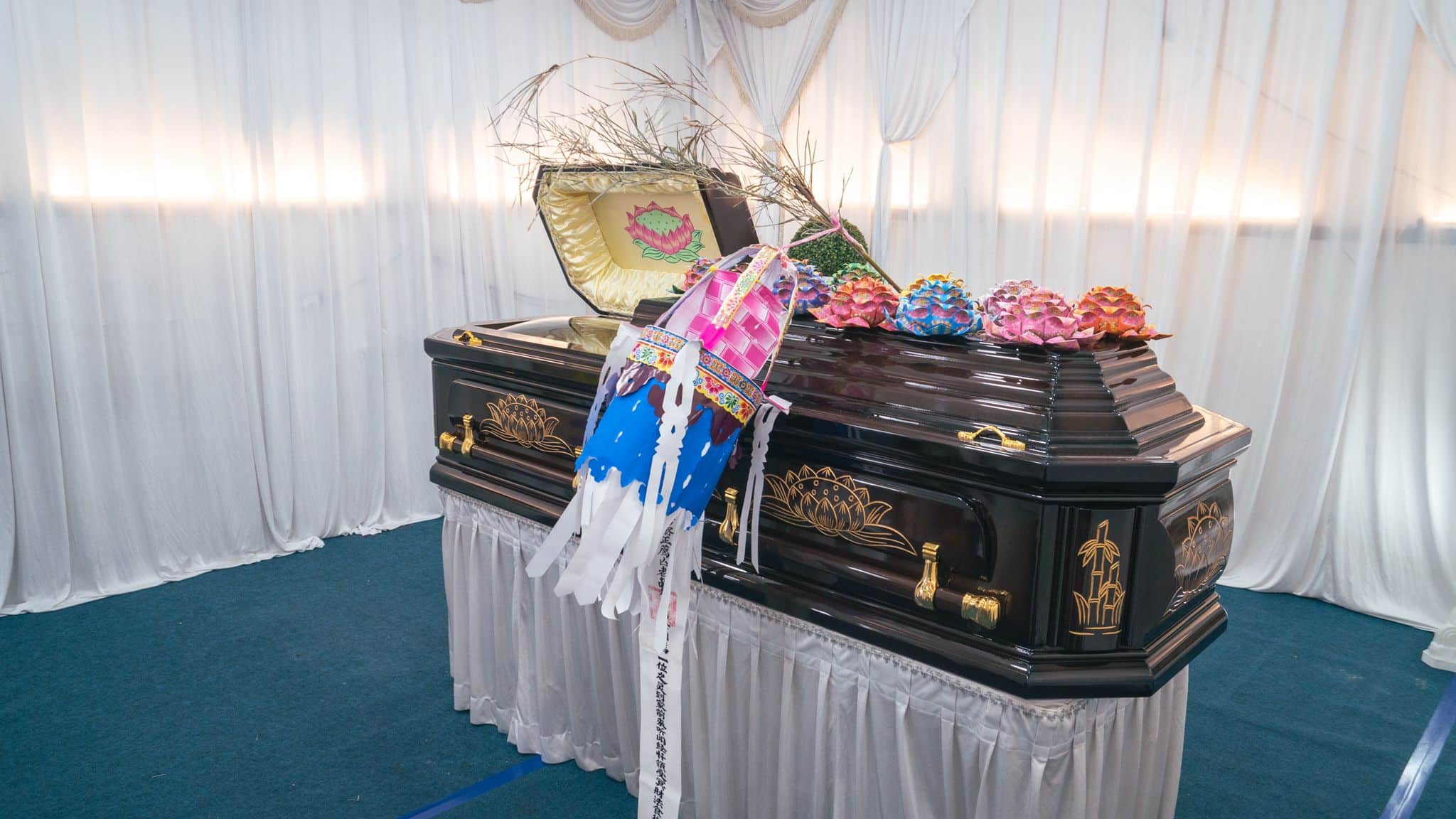
We collect the deceased and carry out professional dressing and the encoffining ceremony, which some families have a Taoist priest attend and lead with prayers. Embalming is included as part of our standard wake arrangements (funeral-parlour, home or HDB void-deck packages); it does not apply to an arrangement without a wake. Some families also choose to dress the deceased in longevity attire (also called shou yi, 寿衣), or to place a ceremonial blanket with the deceased, sometimes called a "sky-earth" blanket (tian di bei, 天地被). Families who use longevity attire often describe symbolic conventions such as a looser fit with wide sleeve and leg openings, full coverage of the arms, no pockets, and an odd number of layers. Some families explain these conventions as wishing prosperity rather than hardship on descendants, or as meaning the deceased does not carry belongings, or luck, away from the living; these are folk explanations passed down informally, not a single documented rule, and whether any of them apply, and in what form, differs by family and lineage. These are family and priest decisions rather than fixed requirements; ask your appointed priest to explain what applies to your family's practice.
Choosing the wake venue
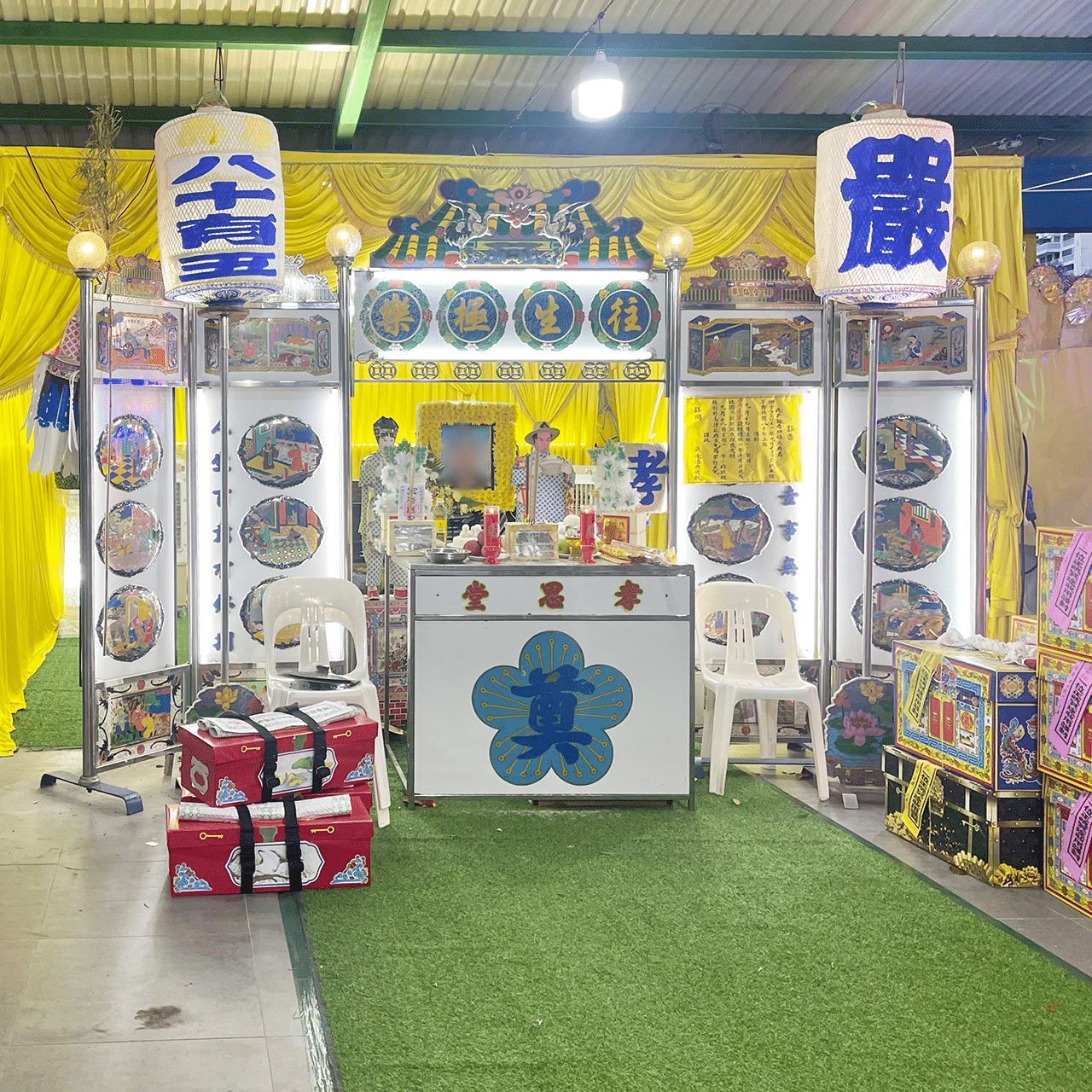
Most families hold the wake at an HDB void deck, a funeral parlour, or occasionally at home (for landed property). Each venue has different setup requirements, booking processes and rules on wake length and noise, so your funeral director will help confirm availability and any venue-specific requirements before booking.
Role of the Taoist priest
A Taoist priest (sometimes referred to as a Daoshi) leads the religious rites: chanting, prayers and rituals intended to guide the deceased and support the family. Depending on the priestly tradition and family practice, the priest may also lead the encoffining ceremony, determine which paper items are prepared, and set the sequence of prayers across the wake. We engage the priest according to your family's wishes and, where relevant, your family's temple or clan connections; the appointed priest ultimately determines the religious sequence.
Why these rites are performed: Taoist beliefs about death
Taoist and broader Chinese folk teaching generally describes death as a transition rather than an ending, and many of the rites on this page are explained by families and priests as ways of supporting that transition and comforting the living. Some teachings describe more than one aspect of the soul following different paths after death — for example, ideas sometimes described using the terms hun and po — and describe the deceased as undergoing a journey that the family's prayers, paper offerings and rites are intended to support. The specific terminology, number of soul-aspects described, and details of any afterlife journey vary between schools of Taoist thought, temples and individual priests, and are not standardised across Singapore's Taoist community. We are not a religious authority on this: we describe it here as background for families researching the topic, and this section has not yet been reviewed by a Taoist priest or temple. For an authoritative explanation that applies to your family's tradition, ask your appointed priest.
Common rites and what they represent
Some rites families may encounter, and what they are generally understood to represent, include:
- Chanting and prayers — led by the priest to guide the deceased and comfort the family.
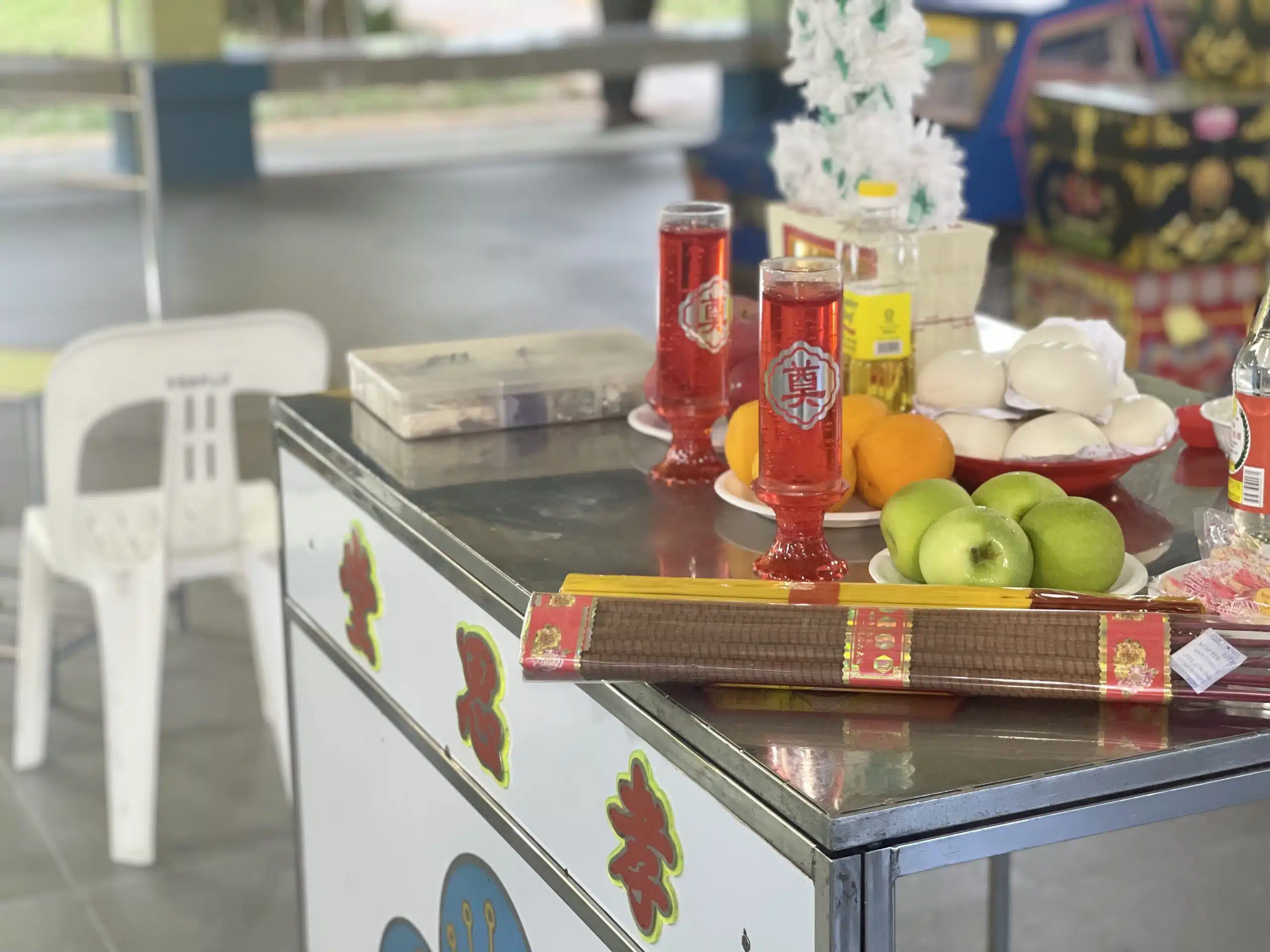
- Altar offerings — a photograph of the deceased, food and drink, incense and candles, kept at the altar through the wake.
- Burning of paper effigies and items — intended, as commonly explained by families, to provide for the deceased's needs in the next life.
- A ceremonial performance — some wakes include a performance on the final day, sometimes referred to as "gong gang," involving a pair of large-headed puppet figures, sometimes called "big-headed dolls" (da tou wa wa, 大头娃娃) — one with a smiling face and one with a crying face — accompanied by cymbals and drums. Not every wake includes this, and the exact form and meaning depend on the family, association and priest involved.
Depending on the priest and lineage, some families also observe additional or different rites. This list reflects what we commonly help arrange, not an exhaustive or authoritative account of Taoist ritual; confirm the precise rites and their meaning with your appointed priest, since practices can vary even within the same dialect group.
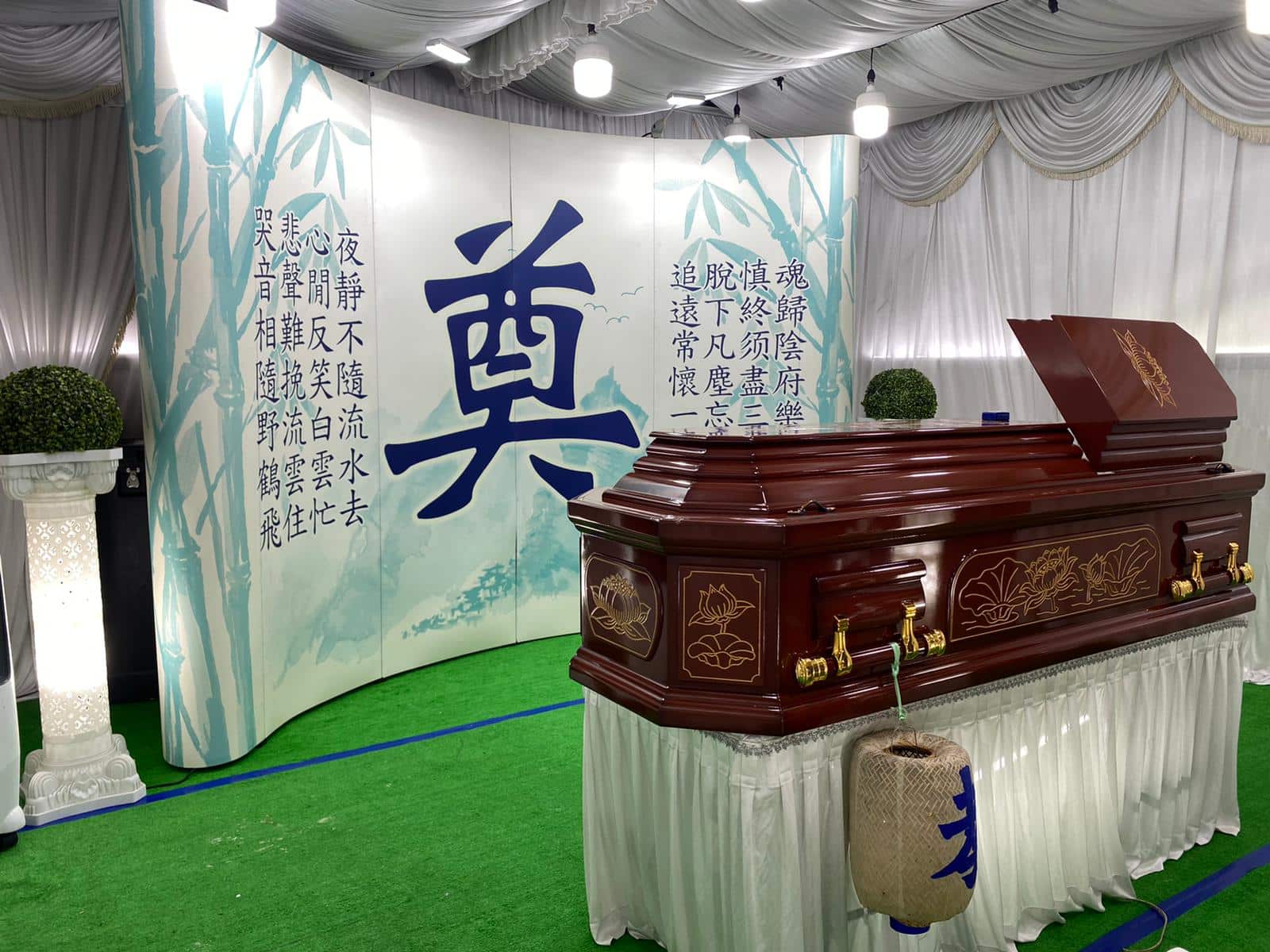
Offerings, joss paper and symbolic items
Paper offerings commonly include paper houses, paper mountains, paper attendants and everyday items rendered in paper, understood by many families as providing for the deceased in the afterlife. Some families also observe additional paper-burning customs as guided by their priest. The specific items, placement and meaning of any paper offering are set by the family's tradition and appointed priest, not a fixed list; we help source and arrange the items, not determine which are appropriate for your family. Elaborate, hand-crafted paper offerings can take longer to prepare, particularly during busier periods such as the seventh lunar month (the Hungry Ghost Festival period), so ask your funeral director about lead times if you are considering a custom item.
Typical three-day funeral timeline
Among the Taoist funerals arranged by Harmony Funeral Care, wakes are commonly held for 3, 5 or 7 days, with three-day arrangements frequently selected. A typical 3-day timeline might involve: encoffining and altar setup on day one; visitors, prayers and chanting sessions on day two; and final-night prayers, paper offering burning and the funeral-day procession on day three. The exact schedule depends on your priest, venue and family's wishes, and your funeral director will confirm the specific timeline with you.
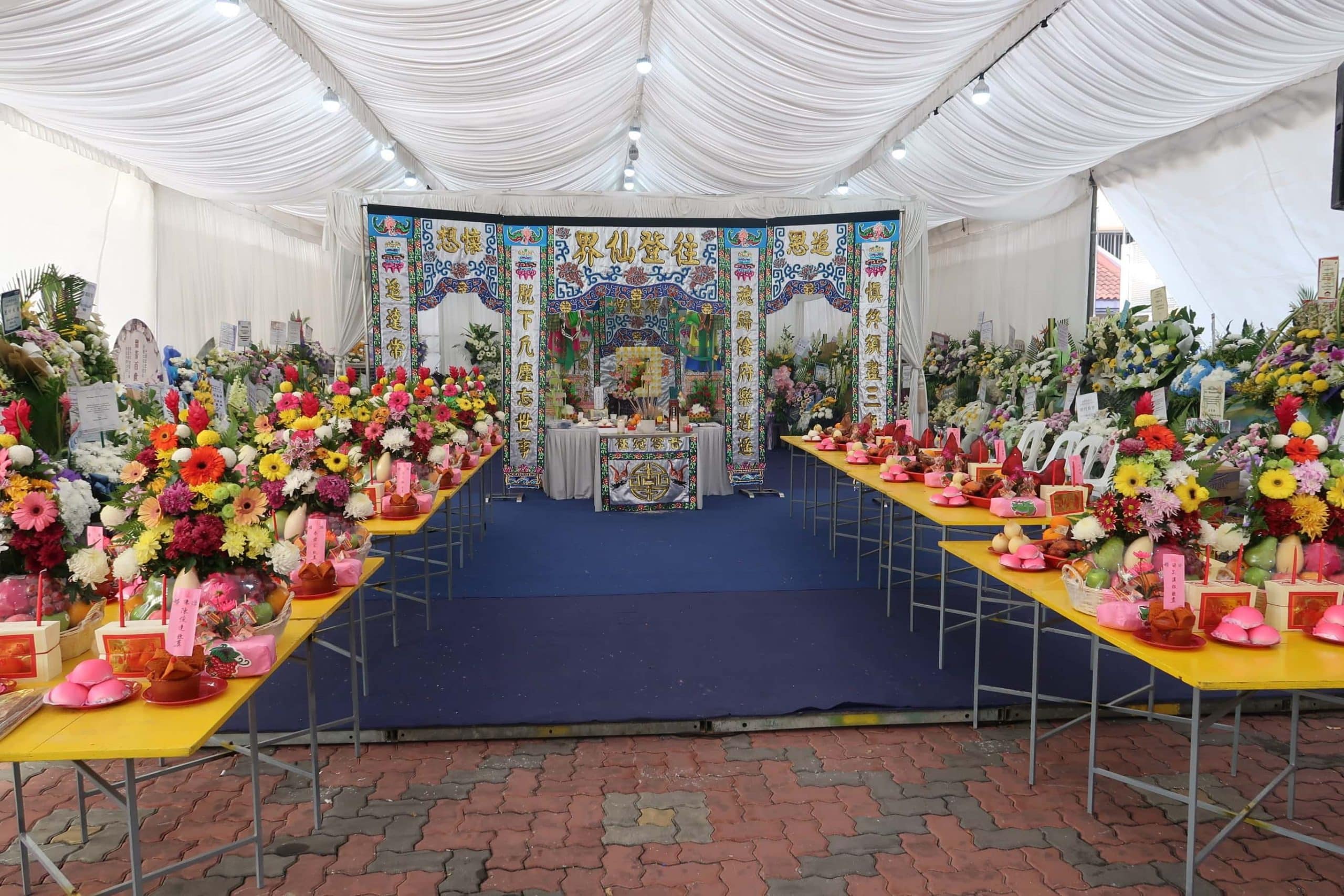
Funeral-day procession
On the funeral day, the procession typically involves pallbearers carrying the casket, an emcee guiding proceedings, floral arrangements, a hearse and a coach for family and close friends travelling to the crematorium or burial site. Some families choose specific processional customs, such as a particular route or stops, which your funeral director can help arrange.
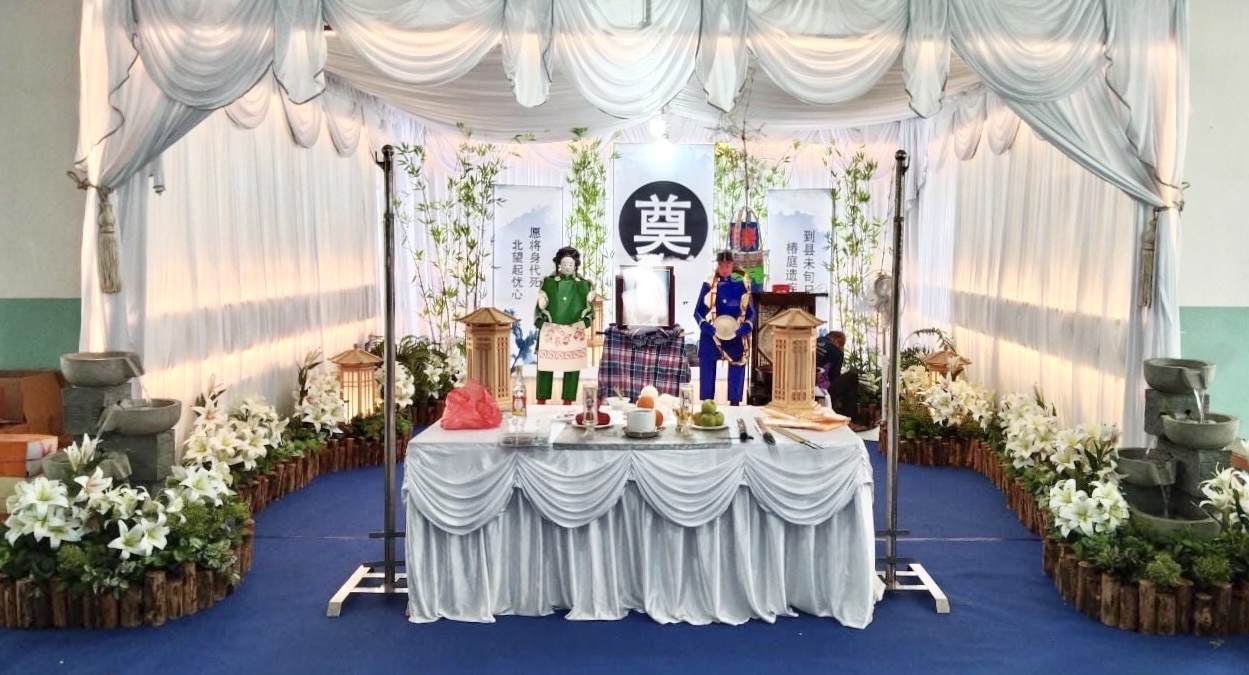
Cremation or burial
Cremation is commonly chosen in Singapore, reflecting the country's land constraints, although it is not a Taoist-specific requirement. Burial remains available subject to eligibility, available space and current cemetery policies. Government cremation and ash-storage arrangements, including fees and columbarium options, are set by the National Environment Agency (NEA); see NEA's cremation and ash storage page. We coordinate the booking and paperwork either way.
What the family needs to prepare
- The deceased's identification details and the digital death certificate or other accepted written confirmation of death, where applicable.
- A recent photograph for the memorial portrait.
- Decisions on wake venue, wake length and choice of priest, ideally discussed with close family in advance.
- Any family-specific rites, temple or clan connections to share with your funeral director and priest.
- Clothing or attire for the deceased, if the family prefers to provide their own.
What visitors should know
Visitors to a Taoist wake commonly dress modestly and avoid bright colours such as red. Condolence money in a white envelope is a common practice, though families differ on whether they expect this, and some request it be omitted; when in doubt, ask the family or funeral director. Visitors are generally welcome to offer incense at the altar if invited to do so by the family.
Post-funeral arrangements
After the funeral, families typically arrange ash collection from the crematorium, and some arrange periodic prayers, offerings or memorial rites in the weeks that follow. Some Chinese families, including some Taoist families, observe a 49-day period of prayers influenced by Buddhist or blended Chinese customary practice; this is not a universal or exclusively Taoist requirement, and whether to observe it, and in what form, is a family and priest decision. See our Taoist funeral package and cost guide for how post-funeral rites are typically priced, since they are usually arranged separately from the wake package.
Modern adaptations for Taoist funerals in Singapore
Alongside traditional rites, some Singapore families and funeral providers now offer or request modern adaptations, such as a more streamlined ceremony schedule to suit working family members, eco-conscious options like biodegradable offerings, and digital elements such as a photo or video montage of the deceased, or a livestream for relatives who cannot attend in person. These are options some families choose alongside, not instead of, the core religious rites; ask your funeral director which modern options we can accommodate for your arrangement.
How Taoist and Buddhist funerals differ
Both Taoist and Buddhist funerals in Singapore commonly involve a priest or monk leading chanting, an altar with offerings, and a wake before cremation or burial, and many Chinese families in Singapore blend elements of both alongside customary practice. The core religious framework differs: Taoist rites generally draw on Taoist cosmology and deities, led by a Taoist priest, while Buddhist rites draw on Buddhist teachings and are led by a monk. Neither tradition is more or less elaborate than the other as a rule; the specific rites depend on the family, priest or monk, and temple involved. If your family is unsure which tradition to follow, or wants to blend elements of both, discuss this with your funeral director and religious adviser.
Questions to ask a funeral provider
- Which Taoist rites and how many priest sessions are included in the package?
- Can you accommodate our family's dialect background or preferred priest?
- What is included in wake setup, and what costs extra?
- How is the funeral-day procession arranged?
- What support is available for post-funeral rites?
- Can we get this in writing before we commit?
Frequently asked questions about Taoist funeral services
What is included in a Taoist funeral service?
A Taoist funeral service generally coordinates collection of the deceased, embalming where selected or appropriate, encoffining, wake venue booking and setup, a Taoist priest and rituals, paper offerings, the funeral-day procession, and cremation or burial coordination. For current package prices and what is included, see our Taoist funeral package and cost guide.
Is embalming always included in a Taoist funeral?
Embalming is included as a standard part of our funeral-parlour, home and HDB void-deck wake packages, since the deceased is on view during the wake. It generally does not apply to an arrangement without a wake, such as a direct arrangement straight to cremation or burial. Ask your funeral director to confirm what applies to your chosen arrangement.
What happens during a Taoist funeral?
Broadly: the deceased is collected and encoffined, with embalming carried out where a wake is held; a wake is held over an odd number of days (commonly 3), with a Taoist priest leading chanting and prayers; paper offerings are burned, often on the final night; and the funeral day involves a procession to the crematorium or burial site. The exact sequence depends on the priest, lineage and family tradition.
Why do priests chant during a Taoist funeral?
Chanting is generally understood as guiding the deceased and offering comfort and support to the grieving family. The specific texts, sequence and number of sessions depend on the priest and family's tradition.
What do Taoists believe happens to the soul after death?
Taoist and broader Chinese folk teaching generally describes death as a transition rather than an ending, and some teachings describe more than one aspect of the soul following different paths, sometimes using terms such as hun and po. The specific terminology and details vary between schools of thought, temples and priests, and this page is not a religious authority on the subject; see why these rites are performed and ask your appointed priest for the interpretation that applies to your family.
What is the performance with big-headed dolls at some Taoist wakes?
Some wakes include a final-day performance, sometimes referred to as "gong gang," involving a pair of large-headed puppet figures known as big-headed dolls (da tou wa wa), one smiling and one crying, accompanied by cymbals and drums. Not every wake includes this, and the exact form and meaning depend on the family, association and priest.
Are modern or eco-friendly options available for a Taoist funeral?
Some families choose modern adaptations alongside the core rites, such as a more streamlined ceremony schedule, eco-conscious options like biodegradable offerings, and digital elements such as a photo or video montage or a livestream for relatives who cannot attend. See modern adaptations for Taoist funerals and ask your funeral director which options we can accommodate.
Can we customise the Taoist funeral rituals?
Yes. Families can discuss which rites matter most to them with their appointed priest and funeral director, and are not required to include every available ceremonial item. We help families preserve the customs that matter most to them.
Are guests expected to give condolence money at a Taoist wake?
This varies by family. Condolence money in a white envelope is a common practice in Singapore, but some families do not expect it or ask that it be omitted. When in doubt, check with the family or ask your funeral director.
How does a Taoist funeral differ from a Buddhist funeral?
Both commonly involve a religious leader chanting, an altar with offerings, and a wake before cremation or burial, but a Taoist funeral is led by a Taoist priest drawing on Taoist belief, while a Buddhist funeral is led by a monk drawing on Buddhist teachings. See how Taoist and Buddhist funerals differ.
Related guides
Official sources and how this guide was reviewed
- National Environment Agency: Burial, cremation and ash storage
- National Environment Agency: Arranging a funeral
- ICA: Register and download a digital death certificate
- MyLegacy: When death happens
Editorial scope: This operational guide was reviewed by Harmony Tee, Founder and Funeral Director of Harmony Funeral Care, based on the company's experience arranging Taoist funerals in Singapore. Religious practices vary by priest, temple, lineage and family. The appointed priest remains the authority on the rites required for an individual funeral.
Review date: . Descriptions of how we coordinate arrangements, what we help families prepare, and government processes (cited to NEA, ICA and MyLegacy) reflect our operational experience or official sources. Descriptions of ritual meaning are general information, not independent religious authority.
Need help arranging a Taoist funeral?
Harmony Funeral Care can explain the process, arrange a priest suited to your family's background, and coordinate every practical arrangement. Contact us for a free, non-obligatory consultation.
 WhatsApp us