
Questions You Have Always Wanted To Ask Regarding Chinese Funeral Customs
Funerals are one of the most important events in Chinese society, as they give a chance for family members to pay their respects to the deceased and honour them in a meaningful way. Indeed, funerals are a difficult time for families, no matter the culture. In Chinese culture, funerals are steeped in centuries of tradition and rituals that many people don’t understand. Whether you’re attending a funeral or just curious about the customs, it can be challenging to know what questions to ask. This article will explore some of the common questions people have regarding Chinese funeral customs. It will cover topics such as burial practices, mourning periods, and traditions related to death and dying.
Why Do Well-Wishers Send Blankets To A Funeral At HDB Void Deck?
Condolence blankets are traditionally used in Chinese funerals such as Buddhist and Taoist funerals. Historically, blankets were donated to provide coverage during the funeral service, so it could provide privacy for the bereaved families. They are still commonly found nowadays, especially in HDB void deck funerals. People also relate this gesture to a sign of respect for those who have passed away; similar to how we lay flowers at grave sites today. It is considered an act of kindness and generosity for those grieving the loss of their loved ones.
What Do Taoist Priests And Buddhist Monks Chant About When They Perform Funeral Rites?

During Taoist funeral ritual, the priest will chant, recite scriptures and sutras, asking for repentance of sins by performing movements near the flames through circling a fire where 9 tiles rest. This represents the levels of the underworld. He’d brandish a sword to vanquish evil spirits by breaking the tiles to free the deceased from the underworld. Whereby another priest will pray on a lotus shaped seat, symbolising the goddess of mercy, Guan Yin.
The main forms of Buddhist funeral services commonly performed in Singapore are the Mahayana, Theravada, and Vajrayana. Although each form practises different memorial rituals, all three still share one belief in “Samsara”, which is the repetitive cycle of death, rebirth, and karma.
• The Mahayana
The Mahayana tradition believes that there is a critical bridge between death and rebirth that will affect the reincarnation deal. Proper funeral ceremonies and prayers could help the deceased make a smooth transition and auspicious rebirth. The monks will be chanting the “Amitabha Sutra” religious scripture at a Mahayana’s funeral ritual.
• The Theravada
Theravada Buddhism believes that death occurs instantaneously, and rebirth is determined on the karma and merits done during the deceased person’s lifetime. The monks will be chanting the “Abhidhamma Sutra” religious scripture at a Theravada funeral ritual. The “forsaken robe” cloth, representing the shrouds that monks used as their robes during Gautama Buddha’s time will be offered to the monks on behalf of the deceased as well.
• The Vajrayana
Prayers, mantras, and the Buddha’s name will be chanted during Vajrayana funeral ritual. The Bardo Thodol, also known as the “Tibetan Book of the Dead”, will also be read to the deceased to guide them to exaltation and be freed from the cycle of the “Samsara.”
If I experienced a death in my family, how long should I be in mourning, and how long should I stay away from happy occasions like a friend’s or relative’s wedding?

Depending on the culture, it can be seen as an occasion with varying degrees of mourning period. For instance, it is a must for traditional Chinese in China to mourn the dead for three years. On the other hand, there are two lengths of mourning period for Singaporean Chinese culture, they generally mourn for 49 or 100 days. During this time, people in mourning are discouraged from attending happy occasions and not permitted to wear red, yellow or brown clothes.
If I Send A Floral Wreath To Offer My Sympathies, Should I Still Give The Family A Condolence Donation?

In the event of a death, it is customary to send sympathy cards or gifts to show your condolences. Sending a floral wreath is one of the most common methods of expressing sympathy; however, in some cases, some families would prefer condolence donations as part of their mourning process. Asking yourself “should I still give the family a condolence donation if I’ve sent a floral wreath to sympathise?” may be at the forefront of your mind. In most cases, sending both a floral wreath and a condolence donation is an appropriate way to express your sympathies for someone who has experienced loss. When considering whether you should make an additional donation or not, it is important to keep in mind that there are multiple ways that these funds can be used by the bereaved family members. You may also seek confirmation from the family if they would prefer to receive a floral wreath or condolence donation to avoid confusion.
Why Are Chinese Funerals Procession So Noisy And What Can I Do About The Noise?
Singaporeans are free to book a common area with Town Councils in Singapore by paying a “flat fee” for renting out spaces for events like funerals. Chinese traditional culture believes that loud music will keep evil spirits away, as well as loud music symbolises that the deceased is fully respected. Thus, the funeral is conducted grandly to pave a grand exit for the deceased. However, if the noise generated goes beyond acceptable levels, you may contact your respective City Council to lodge a complaint. During off-peak periods especially 10.30pm to 7am, you may contact the police through their hotline 1800-2550000, which officers will be dispatched to quell the disturbance. Mediation is normally the best avenue to address matters among neighbours. Only in rare instances does penalty end up being required, and only for the most serious of offences. You may refer to Section 14 of the Miscellaneous Offences (Public Order and Nuisance Act), an offence that continually produces noise is likely to anger others is a punishable offence.
Do The Chinese Prefer Cremation, Burial Or Sea Scattering In Singapore?
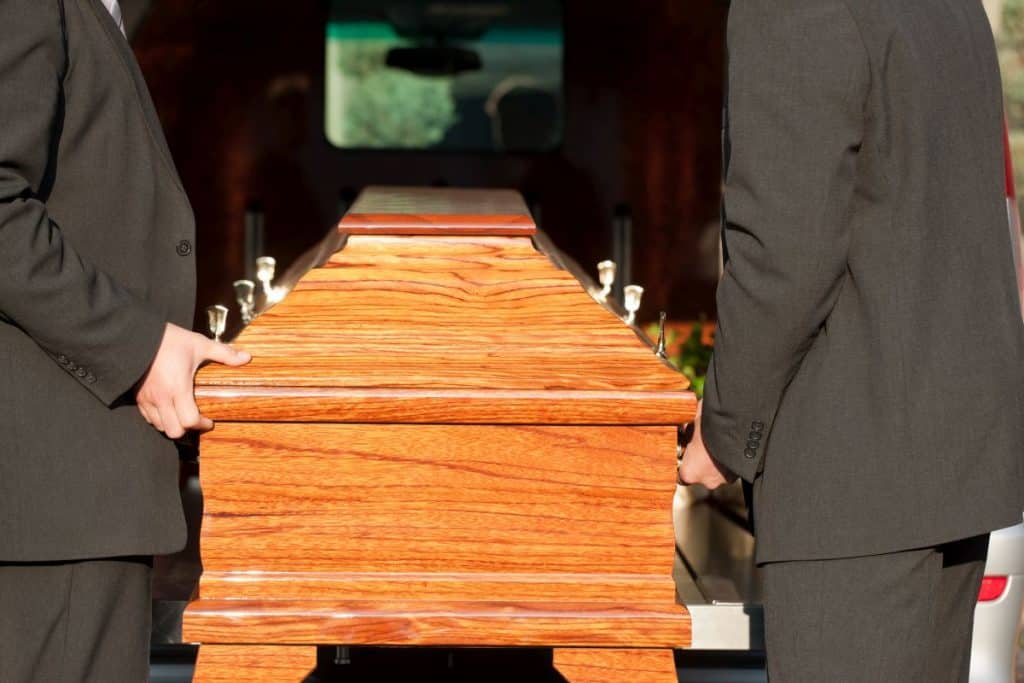
In Singapore, most of the Chinese prefer cremation rather than other ways for the deceased. This is due to burials in Singapore being limited to only 15 years, then it will be dug up to save space. Dug bodies will either undergo cremation or interred in small plots in the case of other groups whose religions require burials. As such, the younger generation in Singapore prefer to take a more pragmatic approach, as they refuse to trouble the future generations. Most of the Buddhist and Taosists would prefer to place their ashes in columbariums of temples. Followed by sea scattering, besides Hindus, it appears that Chinese are slowly increasing their preference for sea burials within the community, mainly affected by sentimental reasons or familial traditions. Burial may be the traditional practice of honouring one’s deceased in many cultures, but it is not an option that many Chinese in Singapore are willing to choose. Burials in Singapore require the grave to be dug up after 15 years due to land scarcity, and this has caused many families to question its respectful nature. Furthermore, it is becoming increasingly expensive for individuals and families to purchase a plot for burial as cemetery prices continue to rise. The idea of exhuming their deceased loved ones every 15 years is seen as disrespectful by many Chinese in Singapore. It can also be emotionally devastating, especially when family members have just gone through the grieving process. Instead of opting for burials, they choose other options such as columbarium or niche interment, which allows them more time with their loved ones while still complying with the laws set by authorities regarding land use and conservation.
Are Cremation Ash Urns & Columbarium Niche Included In Chinese Funeral Package
The answer is yes, with many Chinese funeral homes now offering cremation ash urns and columbarium niches as part of their standard funeral package. These options enable families to choose a more modern form of memorialization that is respectful of traditional customs. The packages provide families with an affordable way to honour their loved one while still adhering to their cultural beliefs.
In conclusion, Chinese funeral customs can be a complex topic to understand. We have explored the most important questions regarding this subject, from the types of funeral ritual rites to how long mourning lasts. While we may not all follow the same customs when it comes to funerals, understanding and respecting different cultures can help us appreciate one another’s beliefs and traditions. It is important to remember that Chinese funeral customs are steeped in thousands of years of tradition, and as such, should be treated with respect.
 WhatsApp us